An idiochromatic mineral is a mineral that gets its color from a chemical element that is an essential part of its chemical composition. In other words, the element causing the color is built into the structure of the mineral itself, not just present as a trace impurity.
Examples of idiochromatic minerals
The table below shows some common examples of idiochromatic minerals:
| Mineral | Coloring Element | Typical Color |
|---|---|---|
| Azurite | Copper (Cu²⁺) | Blue |
| Cuprite | Copper (Cu⁺) | Red |
| Malachite | Copper (Cu²⁺) | Green |
| Olivine | Iron (Fe²⁺) | Olive green |
| Realgar | Arsenic (As³⁺) | Orange to red |
| Rhodochrosite | Manganese (Mn²⁺) | Pink to red |
| Sulfur | Sulfur (S) | Yellow |
You may notice that azurite, cuprite, and malachite all get their color from copper. So why do they appear in such different colors?
The answer lies in crystal chemistry and physics. Although these minerals owe their color to copper ions, differences in their crystal structures, oxidation states, and coordination environments lead to variations in how they absorb visible light - and therefore, in the colors we perceive.
The opposite of idiochromatic minerals are allochromatic minerals, which are colored by impurities or trace elements rather than essential components.
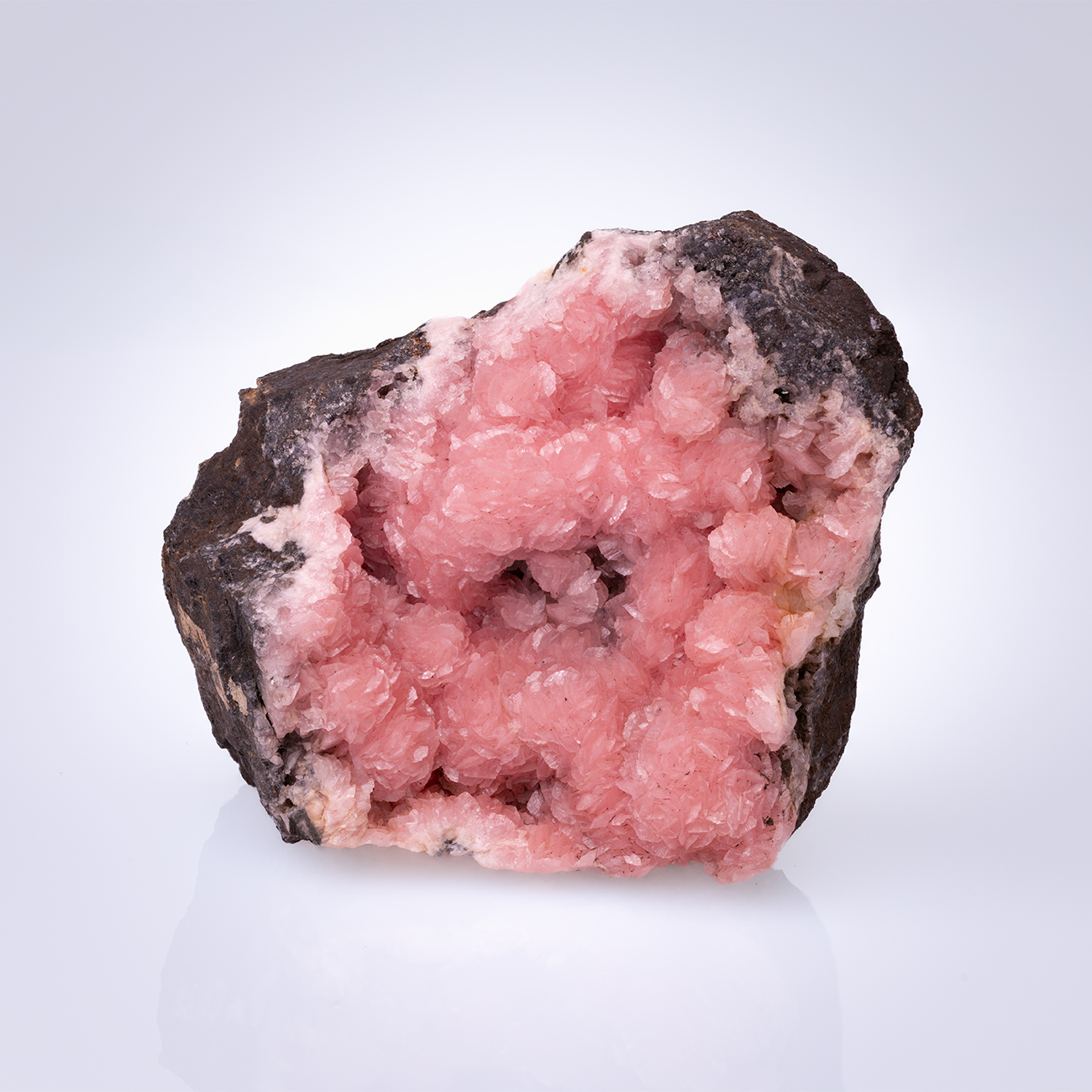
Image: Rhodochrosite is an idiochromatic mineral that gets its pink to red color from manganese.