Collecting fine minerals is becoming increasingly popular. Because of their visual aspect, they can be seen as a form of art - and they can also be a long-term investment. Prices tend to rise every year, similar to what we see in the real estate market.
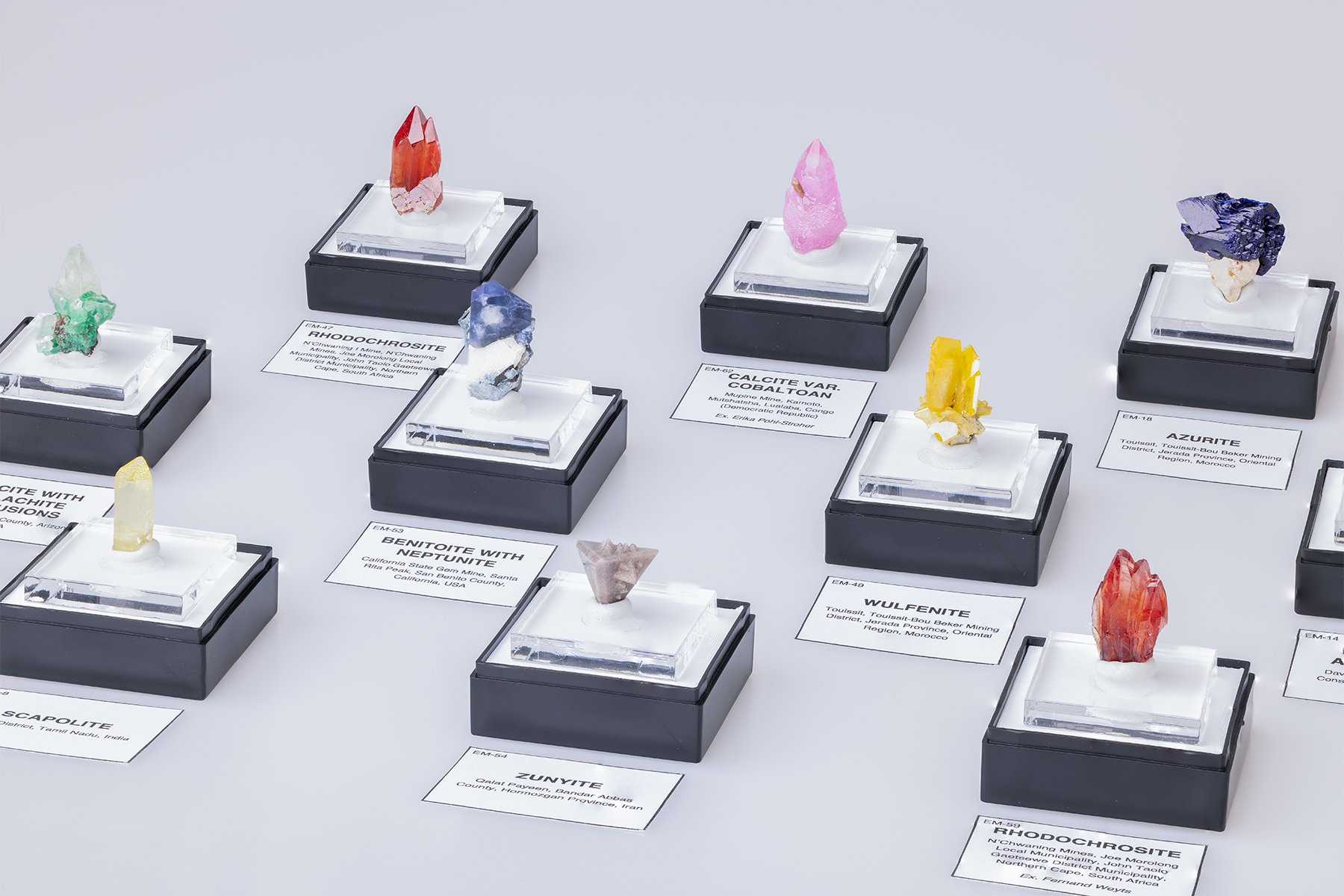
Photo: Collection of thumbnail mineral specimen
In this article, we’ll take a look at what to consider before starting a mineral collection. We'll go through some common mistakes, explore where to buy fine minerals, and discuss three rules to follow when making a purchase.
What You Need to Start
The good news is that you don’t need much to start a mineral collection. In terms of money, you can build a collection even on a low budget by finding very nice pieces in the €10 to €100 range.
Beyond your budget, all you really need is a bit of space to store or display your minerals. There are special display cases for minerals, and you have several options - from small, home-built cases to large, professional ones, which can be quite expensive.
Whichever option you choose, lighting is incredibly important - probably one of the most critical aspects of displaying your minerals. You need good lighting, because without it, even a world-class specimen can look like junk. Be careful what light source you use; for example, halogen lights can produce heat, which isn’t suitable for some mineral species.
There’s a lot more to consider, such as the angle of the lighting, color temperature, and so on.
Common Mistakes
1. Random CollectingThe most common mistake people make when starting is random collecting, and I did the exact same thing. To build a valuable and meaningful collection, you should specialize in a certain type of mineral. There are many ways to approach this, and I’ll cover them in a separate article - so make sure to subscribe to stay updated.
2. Buying Sensitive Minerals Without ExperienceAnother mistake is buying sensitive minerals without experience. Don’t buy minerals that are sensitive to light, heat, or moisture unless you know how to care for them. A basic example is halite (which is basically salt). It can be a nice blue mineral, but it will gradually dissolve over time if it’s not kept in a very dry environment. If you buy from us, we always note this on the product page for each mineral.
3. Storing Reactive Minerals TogetherA third mistake is storing reactive minerals together. Some minerals can’t be stored next to each other because they can chemically react. For example, sulfur can emit fumes - specifically sulfur dioxide - that can tarnish silver or damage carbonates like calcite. Always research which minerals are safe to store together.
4. Failing to Keep Key InformationThe final mistake is failing to keep key information. Once you buy a mineral, always keep track of all the information that comes with it, including the full mineral name, locality, description, previous owners, and purchase price - basically any detail that came with the specimen. At the end of this article, I’ll share a link to a tool you can use to manage your collection and keep everything organized.
Where to Buy Minerals
If you’re considering buying minerals online, be very careful about who you buy from, and be especially vigilant when using marketplaces like eBay, Etsy, or similar, as there are many scammers out there. I’m not saying the only safe option is to buy from us - definitely not - but you should choose trusted dealers such as Arkenstone Minerals, Weinrich Minerals, or Wilensky Exquisite Minerals.
Another good option is to visit a mineral show. The most famous one in Europe is the Munich Show; in the United States it’s the Tucson Gem and Mineral Show; and if you’re based in Asia, it’s the China (Hunan) International Mineral & Gem Expo (CMGE). There are also many smaller local shows, so there should be one somewhere around you as well.
Three Rules to Follow When Buying Minerals
- Don’t buy damaged minerals - unless it’s something very rare or unique.
- Be cautious with minerals that look perfect but are suspiciously cheap - they’re probably fake, and believe me, there are a lot of fakes on the market.
- Always buy the best you can afford to ensure quality and long-term value.
Keeping Track of Your Collection
As promised, I’ll now tell you about the tool you can use to keep track of all the information you have about your minerals. To manage this information, you could go old-school and use a spreadsheet or Google Sheets - but there’s a better way.
We’ve built a software solution that’s designed to organize your collection. It’s fully online, accessible from anywhere in the world, and it’s completely free. Plus, whenever you buy a mineral from us, it will be automatically added to your collection in this software. Here is the link - register now if you don’t have your account yet.
Thanks for reading, and don’t forget to subscribe to our YouTube channel for more information about mineral collecting.
