In this interview, recorded at the Munich Show 2025, I chat with mineral photographer Matthew (Matthäus) Parshchikov about his approach to photographing minerals. During the interview, Matthew was shooting my fluorite from the Huanggang Mines, China. I love how he creates stunning images even with a very basic setup, proving that you don’t need expensive equipment to create incredible mineral photos!
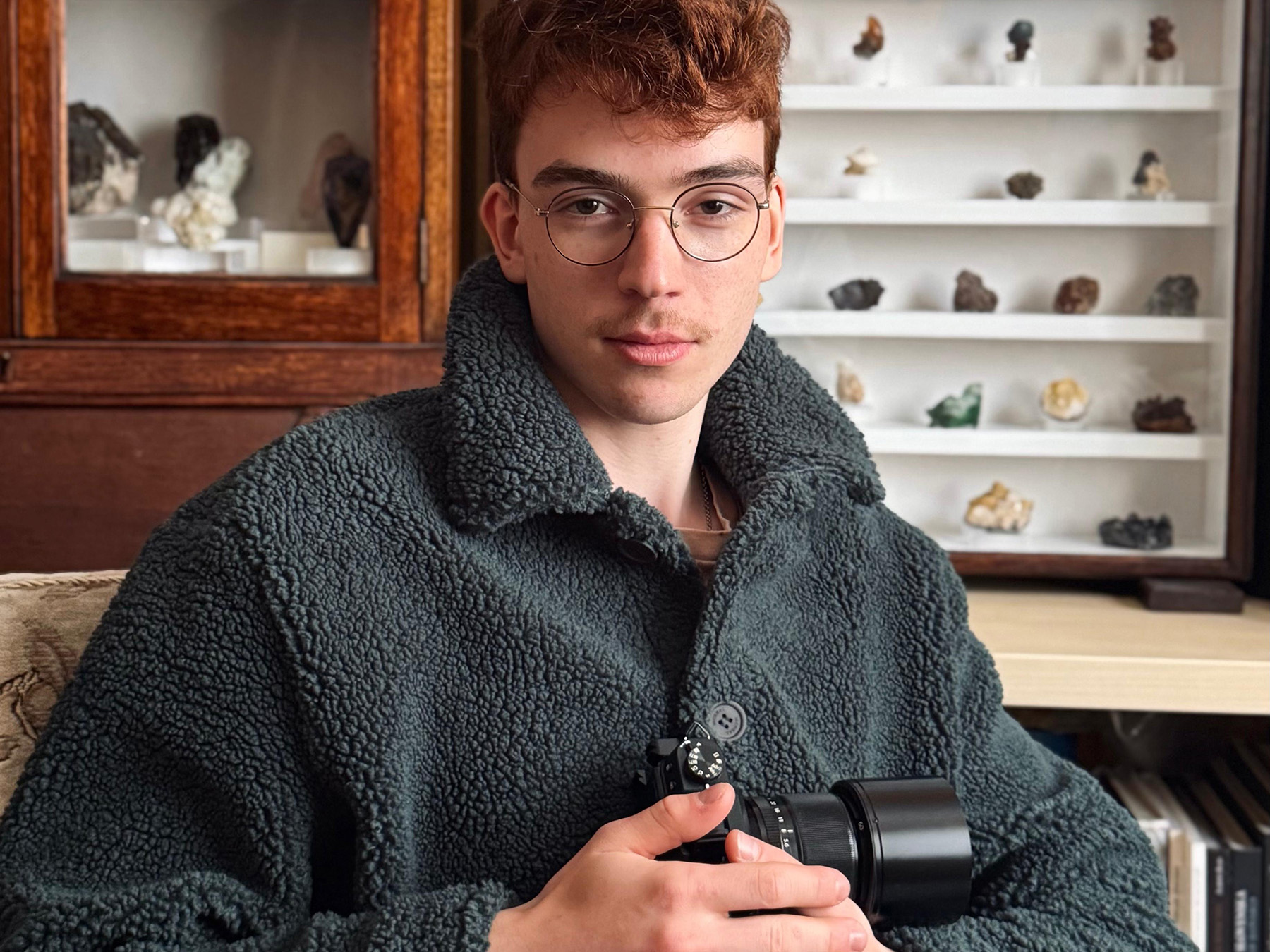
Matthew, born in 2006, is a Cologne-based mineral photographer and earth sciences student at the University of Bonn, specializing in specimens from post-Soviet countries. Since 2023, his images have appeared in leading mineral magazines and show materials, and he hosts the “Under the Radar” interview series for Young Mineral Collectors.
Jakub: How did you actually start? Was it like first “Matthew the mineral collector”, or first you started with photography?
Matthew: Yeah, it was definitely first mineral collecting - but not so professionally, without the focus really. It was just some specimens - like rocks. And then I saw accounts on Instagram who posted mineral photography, like László Kupi for example from Fine Mineral Photography, or the fabulous and very well-known collector Fabian Wildfang from Germany, who had amazing photographs and amazing pieces.
Then I thought, let’s do something similar and maybe show the world what I have - what my pieces are, what I have in my collection. Well, it turns out they’re not as beautiful as theirs, obviously. But this pushed me to really pursue this task to show my collection.
And then later - which happened partly accidentally - I offered a friend that I can photograph his pieces because I ran out of pieces to photograph from my own collection. And then I thought, okay, that works as a second job, or I can earn some rocks or some money with it, while doing my studies - which is exactly what I’m doing now.
Jakub: How did you get into minerals initially - why did you start to collect?
Matthew: I don’t remember when, but it was sometime in my school years before COVID, when I visited the mineral museum in Cologne, where I live. And I saw the minerals and I was very fascinated by them, because I’d never seen perfect pieces like pyrite cubes from Navajún, for example. That was also my first piece - I don’t own that anymore.
Then it kind of faded because of COVID, and I preferred video games over minerals and whatever else. Then, because my parents they come from Russia and my grandma lives there, when I was there, I visited some rock shops, some mineral shops, and found out that I can actually buy those things - in large quantities and pretty nice pieces - in those areas, in those shops.
Then I found out about the Munich Show - that it existed. My first Munich Show was in 2019, and that was an amazing experience to see so many minerals for sale. Then COVID came. I wish I found it out earlier because then maybe I would have learned some things a bit earlier than just now. But still, it’s all a big learning curve. And I love where it’s going. I love the connections, I love the friends, I love the experiences - the interviews and everything - and I like my job as a photographer.
Note: During the interview Matthew was working on photos and describing the process.
Matthew: So, right now I set up my reflectors and focus the light wherever I want it to. And now I’m just doing some photos and I will stack them later.
Jakub: I can see the reflectors in the pictures now - you will remove them in post-production?
Matthew: Yes, I will remove them in post-production and then I will put another background. I hope it’s fixated good, because if it starts moving, that will mess up my stacking. I’ll see in a second if that’s the case or not; otherwise, I’ll have to redo it.
Jakub: When doing backlight, you use reflectors instead of putting a light source directly behind the specimen?
Matthew: Yes, as you can see, I put a reflector behind this fluorite to make it a bit more pink on the bottom. I just don’t own a strong light that can backlight those things. I don’t like shooting pieces that need extreme backlight anyway, so I’m okay with that. Usually the people who want me to shoot those, they usually own a strong backlight, which I can then borrow for this one occasion.
Jakub: Is it like you travel to your clients or they normally send pieces to you and you do it at home and then you sent it back?
Matthew: At first, it was like that, they sent me their pieces and then I sent them back. Then after my first Munich Show, it shifted - people knew that I was exhibiting at the show, so they gave me the minerals here on-site to photograph them. But I also travel to mineral collectors to photograph on-site, but for now it was just in Germany, because it’s quicker and easier.
But maybe in the future I’ll also do it for Europe or internationally, depending on time. Now I have some people who live nearby, so they just drop their pieces off. I photograph them and give it back. It’s a mix, but I prefer the drop-off or traveling to them and make a lot of photos on-site.
Jakub: How much do you charge? Is the price I’ve seen outside just for the Munich Show, or is that general price?
Matthew: That’s the general price you’ve seen outside.
Jakub: So is it like - if you need 1 - 10 photos - €70 per one?
Matthew: Yes, exactly, and then there is an discount if you need more quantities.
Jakub: Let’s say I don’t have money to buy your services. I have some collection and want to make photos at home. Do you think a smartphone is enough to do decent photos, or not sufficient?
Matthew: Depending on your purpose…
Jakub: Let’s say I just need some photos for social media, I don’t need professional ones, I don’t need to get them printed.
Matthew: I still prefer them to be professional, but quick smartphone photo or video also works totally fine. But I just generally don’t like seeing those kinds of photos on the internet because minerals deserve better, in my opinion. Or just get a decent phone with a decent camera and then it’s fine.
I’m not a fan of fake backgrounds and cut-out pieces where you can really see it’s a fake background. They just want to imitate professional and high quality photo. But they don’t have to do that in my opinion - a photo of the piece in their hand is enough for me for social media. Unless you want to print it, then you definitely should get some pro and have your photos done. It’s just my opinion tho.
Jakub: If you had to explain terms like ISO or aperture to beginners - and how do they work together?
Matthew: Well, I can say how to work with it. I don’t really know the full word for ISO, but you should keep it at the lowest possible value because it brings noise into your photo. It makes it brighter, yes, but for mineral photography, keep it as low as possible.
Aperture always depends on lighting. My aperture is at f/8 - it’s the setting of the lens with the largest focus depth. I don’t want to take 2,000 photos for one centimeter specimen (editor’s note: with different focus depth to create one final sharp photo); I just want like three photos. So it’s the sharpest possible value and depth. You can find this info in lens reviews - they usually show graphs where you can see the peak sharpness, for example at f/8. I use a Fujinon 60mm lens and a Fuji X-T20 camera.
Jakub: So what you normally do, you take like three photos with different shallow focus depth and then you put them together in Photoshop?
Matthew: Yes, in a stacking programme. Some cameras - which is not my camera - have automatic stacking inside. I have to turn the focus every few steps manually. Then I stack it and check if it moved. If it moved, I have to redo it.
When I’m photographing on-site and must return the piece, I have to check immediately afterwards, because then I won’t have the piece anymore. If it’s my piece at home, I photograph all my pieces - maybe 50 or whatever - then stack them afterward and see which I have to redo. With more pieces photographed, the error rate obviously is also higher, but it’s not extreme.
Jakub: When I was shooting and did backlight, I got a glow around the mineral edges. Do you have any technique how to deal with it? What I did wrong?
Matthew: Basically, you have to make sure it’s not overlit. You can zoom in on your camera and see - is it white, or almost white? If it’s almost white, you can fix it in Photoshop. But if it’s pure white, you can’t recover it. Try to keep it slightly darker; you can always make it brighter in Photoshop. If you have a halo, you can’t undo it, but if you don’t have one, you can always create one. So it’s a balance between the exposure time and light.
Jakub: How do you deal with dust? Because when I’m showing my minerals, especially the smaller ones, there is lot of micro dust around. I have an air blower, but sometimes it doesn’t help.
Matthew: Rarely, I use a brush. For minerals like azurite, which are very electric and attract dust, you have to remove it manually or wash it. If I get a dusty piece, I tell the owner - I’ll do everything I can, but I can’t wash it. My usual rates include dust removal afterward, but if it’s too dusty, I can’t remove all of it. I mask it as best as possible. Usually it’s not a problem; you don’t see big dust particles unless you zoom like super close.
Jakub: And white balance? How do you deal with white balance? Do you have any tips on that? I’ve seen some people using these white balance cards to calibrate the cameras.
Matthew: I don’t have those cards - I’m too poor for that. No, I’m just kidding, haha. They’re helpful, but I haven’t got one yet. I usually ask the person who commissioned me to send a video in daylight so I can correct the color. But you need a calibrated monitor also.
Jakub: Could you give some examples of pieces that are difficult to photograph and ones that are easy?
Matthew: For example, yesterday I shot a gold-arsenic mineral - super easy, because it’s flat. It was maybe 2 out of 10 in difficulty. It wasn’t 1, just because it’s metallic, so I had to reduce exposure to avoid white reflections. But it’s super flat, so I did just like 3 photos and it was done and I didn’t have to do anything.
But also yesterday I shoot for me an extremelly difficult tourmaline. First thing - it’s gem, the second thing it’s vertical, so I have to make sure it doesn’t fall while positioning reflectors. White minerals on white backgrounds are also difficult - like a phenakite. I shot phenakite once, from Burma. It was elongated and it was on feldspar background, so white on white, clear white on white, with the termination. So this was very difficult. I managed, but these aren’t my favourite.
Also minerals that need super high backlight, like cuprite or azurite. I’m always like “that’s for László Kupi, give me some other pieces”.
Jakub: Regarding the backgrounds - any rule of thumb for which background to use for which mineral color?
Matthew: Yeah, for example, gold looks great on blue. I could use the grey too, but I like the complementary colors. Dark background makes pieces pop. I also have some pieces on light background, but that’s usually for gems, to show the transparency. Or, if it’s too dark, like black minerals I usually use a light grey one. Sometimes I put a bit of colour there, like tiny bit of blue, but not much.
Jakub: If you could choose any famous publicly known specimen to photograph, is there anything you would like to?
Matthew: Well, it’s not because I really like it, but because everyone has photographed it - the Rabbit Ears tourmaline, the Blue Cap tourmaline. It’s pretty well known. I think it’s pretty difficult piece, because it’s large and it’s tourmaline. But just this feeling of having photographed something super unique and so prominent. I like it, but maybe some other time, maybe I will have a chance.
But there isn’t like one piece that I like to photograph, but when I visit collections, there’s always something I think, oh, this could make a nice photo.
Jakub: Thank you for the interview!
Matthew: Thank you for interviewing me. It was my pleasure. I hope to see you again soon.
